
Blog

Blog
7 ways to protect your self-worth when the media questions ADHD
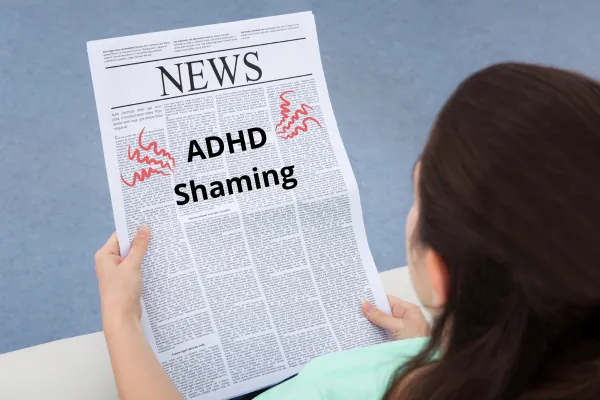
If you have ADHD and you’ve seen the UK headlines about ADHD being “over-diagnosed”, you may have felt a lot of negative emotions about it. When the mainstream media frames ADHD like a “trend”, it doesn’t come across as a neutral debate about people with ADHD and how to help them. It comes across as an attack on our characters. It can make us feel like we're perhaps lazy and don't deserve support.
Let’s take a look at this with kindness, and some clarity.
What’s Really Happening When Those Headlines Hit?
Reading headlines that imply ADHD is over-diagnosed suggests that some of those diagnosed are perhaps making up their symptoms. As somebody with ADHD, that is how I took it. It made me feel somehow invalidated. This is quite a personal blog post for me because I did feel upset when I read some of the comments on the articles, and that is why I wanted to write about this topic. I wanted to tell you that you are brilliant, and you are worthy.
Here are practical ways to protect your self-worth when ADHD becomes a headline.
7 Ways to Keep Your Self-Worth Intact When ADHD is Being Debated
1) Name What You’re Feeling (Without Judging it).
Perhaps you are feeling threatened, invalidated, or even embarrassed. Giving the emotion a name makes it feel less overwhelming. You’re not “too sensitive” by feeling this way. You’re responding to a message that questions your reality.
2) Separate Your Identity From the Internet’s Opinion.
Your worth isn’t up for a public vote. ADHD isn’t validated by headlines. It’s validated by your lived experience: the overwhelm, the masking, the burnout, the constant mental tabs open in your brain.
3) Stop Trying to Prove Your ADHD.
Instead of trying to justify your symptoms to yourself and others, try using this mindset:
'I don’t need to convince everyone. My experience is real, and I deserve support.'
That’s the moment your nervous system stops recognising the conversation as a threat.
4) Use a Boundary Script for Conversations if you Don’t Want to Discuss Your ADHD.
Try to keep it simple when telling somebody your boundaries. It will be clearer for the person to recognise those boundaries if you keep it short. You could try one of these:
“This conversation isn’t helpful for me, so I’m going to leave it there.”
“I’m not here to justify my diagnosis. I’m here to look after myself.”
“I’m focusing on what helps, not on debating whether I ‘deserve’ it.”
“That comment isn’t supportive, so I’m going to change the subject.”

5) Choose One Safe Place to Process.
Doom-scrolling opinions will scramble your nervous system. Pick one supportive space. It could perhaps be a trusted friend, a coach, a community you are part of, or a journal. Choosing one safe place will give you more steadiness, consistency and less overwhelm.
6) Do a 60-second “Worthiness Reset” (Right Now, if you Want to).
Sit back.
Unclench your jaw.
Breathe in for 4 seconds…
Hold your breath there for 4 seconds...
Breathe out for 6 seconds...
Then say (quietly or in your head):
“My needs are valid. My experience is real. I don’t have to prove my struggle to deserve support.”
Repeat this three times.
7) Anchor to What’s True: ADHD is Not a Character Flaw.
Needing strategies, adjustments, medication, therapy, reminders, structure, rest… isn’t weakness. It’s self-awareness. It’s wisdom. It’s you learning how your brain works and building a life that fits you better. Recognising these things is something to be proud of.
A Gentle Reminder From Me
If this topic has knocked your confidence, please hear this: you are not “less worthy” because your brain works differently.
And if you want a calm, practical way to support your mind (especially when shame starts spiralling), my Embracing Differences Course is designed specifically with neurodiverse individuals in mind. Anybody can do it to help with their self worth, but it is particularly good if you struggle with self acceptance and feel perhaps that you want to learn how to accept your differences.

It has activities to keep you engaged to stop the ADHD boredom kicking in. If you want to give it a try, click the banner above.
Lastly, you are enough <3


